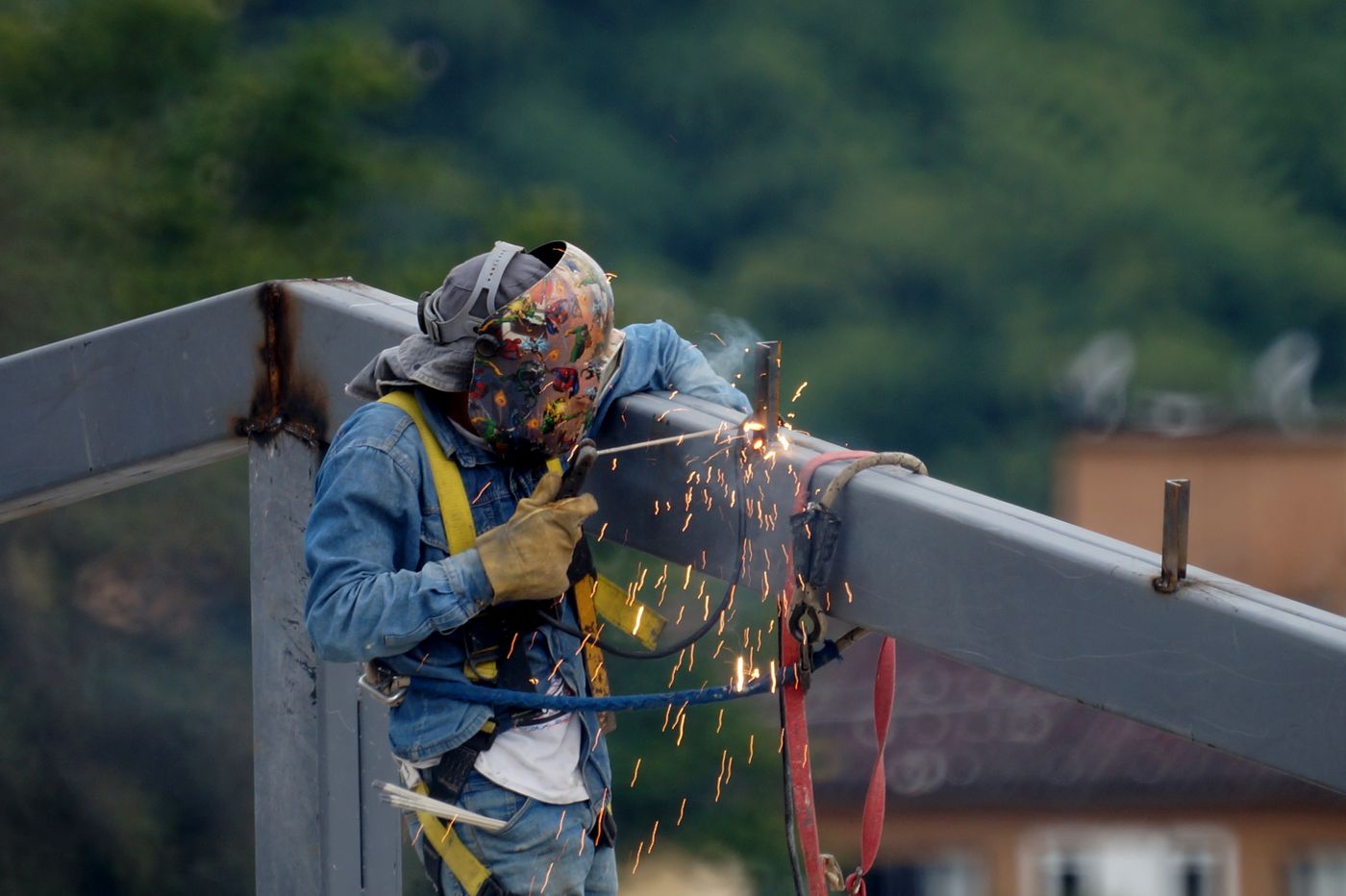
What Are the Highest Paying Welding Jobs?
- Welding engineer has the highest national median on this list: $122,930 a year (BLS, May 2025).
- Welders earn a median $53,750; a certificate plus a passed weld test is the usual way in.
- Underwater welder has the fastest projected growth here, +4.8% over 2025–35 (all occupations: +3.5%).
Types of Welding Jobs Compared
The highest paying welding jobs are at the top of this table. Most of them build on years of welding work or a degree rather than a certificate alone.
| Career | Median pay | Growth 2025–35 | Openings a year | How you get in |
|---|---|---|---|---|
| Welding engineerEngineers, All Other | $122,930 | +3.7% | 8,800 | Degree pathway |
| Welding sales representativeSales Representatives, Wholesale and Manufacturing, Technical and Scientific Products | $104,920 | +1.2% | 23,600 | Experience first |
| Welding supervisorFirst-Line Supervisors of Production and Operating Workers | $74,450 | +1.8% | 61,000 | Experience first |
| Underwater welderCommercial Divers | $72,990 | +4.8% | 400 | Train directly |
| MillwrightMillwrights | $65,700 | +0.9% | 3,200 | Apprenticeship |
| Welding instructor (CWE)Career/Technical Education Teachers, Postsecondary | $63,820 | -0.3% | 8,000 | Experience first |
| IronworkerStructural Iron and Steel Workers | $62,780 | +3.1% | 5,900 | Apprenticeship |
| WelderWelders, Cutters, Solderers, and Brazers | $53,750 | +2.4% | 40,300 | Train directly |
| Pipe welderWelders, Cutters, Solderers, and Brazers | $53,750 | +2.4% | 40,300 | Train directly |
| Structural welderWelders, Cutters, Solderers, and Brazers | $53,750 | +2.4% | 40,300 | Train directly |
| Welding inspectorInspectors, Testers, Sorters, Samplers, and Weighers | $48,570 | +2.5% | 66,700 | Experience first |
| Robotic welding technicianWelding, Soldering, and Brazing Machine Setters, Operators, and Tenders | $47,920 | -8.9% | 2,500 | Train directly |
National medians from BLS Occupational Employment and Wage Statistics (May 2025); growth and openings from BLS Employment Projections 2025–35. Several careers share a BLS occupation group; each career page names the group used.
Four Ways Into Welding Careers
- 1Train directly
Underwater welder, Welder, Pipe welder, Structural welder, Robotic welding technician start with welding training and a passed weld test. BLS lists a high school diploma plus technical and on-the-job training as the typical entry path for welders, and even trained new hires get several months of on-the-job training.
- 2Apprenticeship
Millwright and Ironworker usually learn through 3- to 4-year paid apprenticeships with at least 144 hours of technical instruction and up to 2,000 hours of on-the-job training a year. Welding training helps you get accepted, and welding is taught in both.
- 3Experience first
Welding sales representative, Welding supervisor, Welding instructor (CWE), Welding inspector are usually experienced welders. The AWS credentials for these roles require years of welding-related work: five for the CWI with a high school diploma, three for the CWS, five for the CWE.
- 4Degree pathway
Welding engineers need an engineering bachelor's degree; welding school is preparation, not the credential. BLS says materials engineers typically need a bachelor's in materials science and engineering, and research jobs may require a graduate degree.
Welding Careers One by One
These are the main types of welding jobs, from production welding to engineering, with national median pay, projected growth and the typical entry education.
Welding Engineer
Welding engineering is a bachelor's-degree career: it needs an engineering degree, usually in welding or materials engineering. Median $122,930; +3.7% projected growth; typical entry education: bachelor's degree.
Welding Sales Representative
Welding sales reps sell equipment, consumables and services to fabricators and manufacturers. Median $104,920; +1.2% projected growth; typical entry education: bachelor's degree.
Welding Supervisor
Welding supervisors are experienced welders promoted to run crews or shops. Median $74,450; +1.8% projected growth; typical entry education: high school diploma or equivalent.
Underwater Welder
Underwater welders earn welding certifications, complete an accredited commercial diving program and build supervised experience in wet and dry welding.. Median $72,990; +4.8% projected growth; typical entry education: postsecondary nondegree award.
Millwright
Most millwrights learn through an apprenticeship of about four years, BLS reports, with at least 144 hours of technical instruction and up to 2,000 hours of paid on-the-job training each year. Median $65,700; +0.9% projected growth; typical entry education: high school diploma or equivalent.
Welding Instructor (CWE)
Welding instructors are experienced welders who move into teaching. Median $63,820; -0.3% projected growth; typical entry education: bachelor's degree.
Ironworker
Most ironworkers learn through a 3- or 4-year apprenticeship sponsored by unions or contractor associations, BLS reports. Median $62,780; +3.1% projected growth; typical entry education: high school diploma or equivalent.
Welder
Most welders finish a certificate or associate degree program, or train on the job, then pass a weld test on the procedure an employer uses. Median $53,750; +2.4% projected growth; typical entry education: high school diploma or equivalent.
Pipe Welder
Pipe welders start as welders, then add pipe positions (such as 6G) and the code tests that pipeline, refinery and pressure work require. Median $53,750; +2.4% projected growth; typical entry education: high school diploma or equivalent.
Structural Welder
Structural welders train in stick and flux-cored welding, then pass structural steel tests such as the AWS Certified Welder structural procedures. Median $53,750; +2.4% projected growth; typical entry education: high school diploma or equivalent.
Welding Inspector
Most welding inspectors are experienced welders who earn the AWS Certified Welding Inspector credential. Median $48,570; +2.5% projected growth; typical entry education: high school diploma or equivalent.
Robotic Welding Technician
Robotic welding technicians learn manual welding first, then programming and maintenance of welding robots. Median $47,920; -8.9% projected growth; typical entry education: high school diploma or equivalent.
How Much Welders Make
Half of welders, cutters, solderers, and brazers earned more than $53,750 in May 2025. The lowest-paid 10% earned under $39,240, and the top 10% more than $77,530. Pay rises as you add processes, positions and code tests, and the careers that build on welding (inspection, supervision, sales, engineering) pay more still.
Most Welding Jobs
- Texas: 52,000 jobs
- California: 26,060 jobs
- Ohio: 20,330 jobs
- Pennsylvania: 17,850 jobs
- Florida: 16,420 jobs
- Illinois: 16,260 jobs
- Wisconsin: 15,320 jobs
- Louisiana: 13,690 jobs
Highest Median Pay
- Alaska: $80,840
- Hawaii: $79,000
- Connecticut: $64,880
- Wyoming: $63,820
- Washington: $63,020
- Massachusetts: $62,570
- New Hampshire: $62,360
- Louisiana: $62,250
Welders, cutters, solderers, and brazers (SOC 51-4121), BLS Occupational Employment and Wage Statistics, May 2025 state estimates. Welder salary in every state.
Where Welders Work
Manufacturing is the biggest employer by far. BLS reports that in 2025 the largest employers of welders, cutters, solderers, and brazers were:
- Manufacturing: 63% of jobs
- Specialty trade contractors: 8% of jobs
- Self-employed: 4% of jobs
- Repair and maintenance: 4% of jobs
Welders may work outdoors in any weather or indoors in booths that contain sparks and glare, sometimes on scaffolds high off the ground. Many plants run two or three 8- to 12-hour shifts a day, so evening and weekend work is common. Ironworkers and structural welders work mostly for construction contractors, and millwrights and robotic welding technicians in manufacturing plants.
Which Welding Careers Are Growing?
BLS projects employment for all occupations to grow 3.5% from 2025 to 2035. Among the careers here, welding engineer (+3.7%), underwater welder (+4.8%) beat that pace. Welding instructor (CWE) (-0.3%) and Robotic welding technician (-8.9%) are projected to shrink.
Growth isn't the whole picture. Openings come mostly from people retiring or changing jobs, so a slow-growing but large occupation can still hire many people: welders, cutters, solderers, and brazers grow only +2.4% but have about 40,300 openings a year. Only the larger BLS groups behind welding supervisor and welding inspector have more.
AWS Certifications for Welding Careers
The American Welding Society runs a credential for almost every step of a welding career. Only the Certified Welder test has no prerequisites; the rest require documented experience.
| Credential | What you need first | Exam and upkeep |
|---|---|---|
| Certified Welder (CW) | None: a performance test at an AWS Accredited Test Facility | Structural steel, pipelines, sheet metal and refinery procedures; kept active with maintenance records |
| Certified Welding Inspector (CWI) | Vision test plus 5 years of welding-based work with a high school diploma (1 to 12 years depending on education) | Three exams, 72% on each; valid nine years |
| Certified Welding Supervisor (CWS) | 3 years of practical welding, or 2 years plus 3 years teaching welding | Two exams on safety and quality, cost control and leadership |
| Certified Welding Educator (CWE) | 5 years of welding-related experience and a welding training program | Teaching techniques plus welding theory and processes |
| Certified Robotic Arc Welding (CRAW) | 6 months of manual arc welding; 12 months welding for Operators, 18 plus a CWI for Technicians | Re-exam or proof of practice every three years |
| Certified Welding Engineer (CWEng) | Engineering bachelor's plus 1 year of welding-based work (up to 15 years without a degree) | Valid five years |
| Certified Welding Sales Representative (CWSR) | 5 years of welding sales, or 2 years plus welding and cutting training | Two-hour, 60-question closed-book exam |
Source: American Welding Society professional certification program pages, reviewed September 2026. Welding certification guide.
Where to Train for Welding Careers
892 U.S. colleges and schools conferred 50,572 welding certificates and degrees in 2022–23 (IPEDS). BLS notes training is also available through high school technical education, vocational-technical institutes, private welding schools and the U.S. Armed Forces.
Welding Careers FAQ
Which Welding Career Pays the Most?
Of the careers on this page, welding engineer has the highest national median pay ($122,930, BLS May 2025), but it's a degree pathway route rather than a job you enter straight from welding school. Welding sales representative ($104,920) is next.
Can You Make $100,000 as a Welder?
Not typically on base pay. BLS puts the 90th percentile for welders, cutters, solderers, and brazers at $77,530 (May 2025). Careers that build on welding, such as welding engineer and welding sales representative, have medians above $100,000, and the top 10% of commercial divers earn more than $157,790.
What Welding Jobs Pay $50 an Hour?
$50 an hour is about $104,000 a year for full-time work. On national medians, only welding engineer ($122,930) and welding sales representative ($104,920) clear that among the careers here; both usually require a bachelor's degree.
What Welding Jobs Can You Get With a Certificate?
A welding certificate prepares you for production, fabrication, structural and pipe welding jobs once you pass the employer's weld test. Inspection, supervision and teaching usually come after years of welding work.
How Much Do Welders Make?
BLS estimates a national median of $53,750 for welders, cutters, solderers, and brazers (May 2025), about $25.84 an hour, with the top 10% above $77,530. Alaska has the highest state median, $80,840.
How Long Does It Take to Become a Welder?
Certificate lengths vary by college, from short skills awards to programs of a year or more, and an associate degree takes about two years full time. BLS notes that even trained entry-level welders get several months of on-the-job training once hired.
Are Welding Jobs in Demand?
BLS projects about 40,300 openings a year for welders, cutters, solderers, and brazers through 2035, mostly from workers retiring or changing jobs, even though total employment grows +2.4%.
Latest Posts From the Blog
All posts
National · Careers
Is Welding a Good Career? Jobs, Pay and Growth to 2035
Welding offers 40,300 openings a year and a $53,750 median wage, but slow growth. See BLS projections to 2035, the pay spread and related careers.
New Jersey · Salary
How Much Do Welders Make in New Jersey?
New Jersey welders earned a median $59,440 in May 2025 ($28.58 an hour). See pay by metro, starting and top pay, and the jobs welding leads to.
Virginia · Salary
How Much Do Welders Make in Virginia?
Virginia welders earned a $59,180 median in May 2025, $28.45 an hour. See pay in Hampton Roads, Richmond, Roanoke and more, plus related welding careers.
Explore Welding Schools and Careers
Sources
- U.S. Bureau of Labor Statistics, Occupational Employment and Wage Statistics, May 2025, national and state estimates.
- U.S. Bureau of Labor Statistics, Employment Projections 2025–35 and Occupational Outlook Handbook.
- American Welding Society, professional certification programs.
- U.S. Department of Education, IPEDS completions, 2022–23, CIP 48.0508.