Where Can You Train for Pipe or Structural Welding in Pennsylvania?
14 of the 26 Pennsylvania welding schools in this guide teach pipe welding, including Penn Commercial in Washington, which tests students to ASME IX on pipe and AWS D1.1 on plate. For structural work, the Community College of Allegheny County prepares you for the AWS D1.1 and D1.5 tests. Pennsylvania welders earned a median $52,900 in May 2025, and ironworkers $82,970.
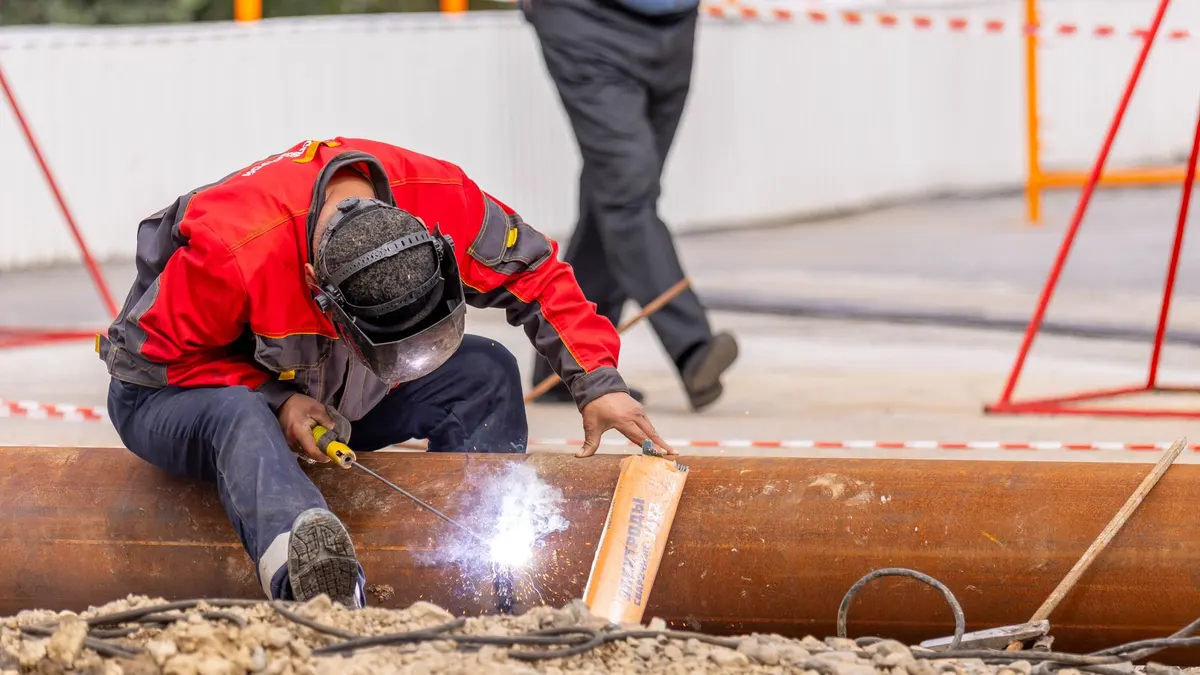
Most welding jobs split into two worlds. Structural welders join beams, columns and plate for buildings and bridges. Pipe welders join pipe for pipelines, plants and refineries, often in fixed positions where you move around the joint instead of turning the work.
Each world has its own tests. If you know which one you want before you enroll, you can pick a Pennsylvania school that prepares you for the right one. This guide sorts the state’s programs by the pipe and structural training they list, the codes they test to, and the jobs each path leads to.
Structural or Pipe: Which Test Are You Training For?
Employers hire welders on proof of a passed test, and the test depends on the work.
- Structural steel: AWS D1.1 is the structural welding code for steel. It is the test most Pennsylvania schools name. D1.5 is the AWS code for bridge welding.
- Pressure piping: ASME Section IX covers welder qualification for boilers, pressure vessels and plant piping.
- Pipelines: API qualifications, usually tested to API 1104, cover oil and gas pipeline work.
Many college programs teach pipe as an advanced course after plate work, and pipe tests are usually taken in fixed positions. So expect to start on plate and structural welding even if pipe is your goal. The pipe welder career guide explains the pipe tests in more detail.
Pennsylvania Schools and the Weld Tests They Name
These schools name a specific code, testing body or test facility in their program description. Use the table to find the ones aimed at the work you want.
| School | City | Pipe welding taught | Tests or codes named |
|---|---|---|---|
| Penn Commercial Business/Technical School | Washington | Yes | ASME IX on pipe; AWS D1.1 stick and flux-cored on plate |
| Community College of Allegheny County | Pittsburgh | Yes | AWS D1.1 and D1.5 |
| Rosedale Technical College | Pittsburgh | Yes | AWS and API qualifications |
| New Castle School of Trades | New Castle | ASME and AWS tests | |
| Johnson College | Scranton | Yes | AWS D1.1 SMAW 3G, plus a weld testing course |
| Welder Training and Testing Institute | Allentown | Yes | AWS Accredited Test Facility and ISO 17025 lab |
| Westmoreland County Community College | Youngwood | Yes | In-house AWS Accredited Testing Facility |
| Lancaster County Career and Technology Center | Mount Joy | Yes | AWS D1.1 |
| Schuylkill Technology Center | Marlin | AWS D1.1 Structural Steel | |
| Indiana County Technology Center | Indiana | AWS D1.1 FCAW 3G, AWS Level 1 | |
| Institute of Medical Careers | Erie | Yes | SMAW and FCAW certifications |
A blank in the pipe column means the school does not list pipe welding among its processes.
Where to Train for Pipe Welding in Pennsylvania
14 of the 26 schools in this guide list pipe welding. They cluster in three areas.
Pittsburgh and the Western Gas Fields
Western Pennsylvania has the most pipe-focused programs, and several name pipeline or oil and gas work directly.
- Community College of Allegheny County, Pittsburgh: offers a Welding, Gas and Oil Certificate alongside its Welding Technology certificate and A.S. degree. Full-time certificate students are ready to sit for AWS certification in four months. It had the lowest tuition in Pennsylvania in 2024–25, at $4,842 in-district.
- Rosedale Technical College, Pittsburgh: an 8-month Welding Technician program on a four-day week, day or evening. It is the only school in the state that names API qualifications, the pipeline credential.
- Penn Commercial, Washington: a 12-month diploma that tests you on pipe to ASME IX and on plate to AWS D1.1 in both stick and flux-cored. If you want both a pipe and a structural test on your record when you leave, this is the most specific program in the state.
- Laurel Business Institute, Uniontown, and Laurel Technical Institute, Hermitage: both run a 12-month Welding and Fabrication with Pipeline Technology program, with 300 hours in the skills lab and 500 hours through an internship.
The Pittsburgh page lists every school in the metro.
The Lehigh Valley and Northeast
- Welder Training and Testing Institute, Allentown: a 900-hour Welder Fitter program. Its lab tests welder and procedure qualifications and is an AWS Accredited Test Facility, so you can test where you train. It conferred 50 welding awards in 2024–25.
- Northampton Community College, Bethlehem: teaches pipe welding and offers a 27-credit diploma, a 50-credit certificate and a 68-credit AAS, with day or evening courses. See the Northampton page for nearby options.
- Johnson College, Scranton: its 65-credit Welding Fabrication and Manufacturing Technology associate program builds an AWS D1.1 SMAW 3G test into the third term, plus an Introduction to Weld Testing course.
Central and Southeast Pennsylvania
- Thaddeus Stevens College of Technology, Lancaster: a 73-credit Welding Technology program and a 32-credit certificate you can finish in 9 months.
- Pennsylvania College of Technology, Williamsport: teaches pipe, robotics and inspection, with a path from a 57-credit welding program to a B.S. in Welding and Fabrication Engineering Technology.
- Universal Technical Institute, Exton: a 36-week Welding Technology program that includes pipe, with 115 welding awards in 2024–25.
Where to Train for Structural Welding
Every school above also teaches plate work. If structural steel is your goal and you don’t need pipe, these programs name the D1.1 structural test directly and fit around a day job:
- Lancaster County Career and Technology Center, Mount Joy: a 12-month Welding Technology program, Monday to Thursday evenings, that prepares you for the D1.1 weld test. It also runs a 12-month Advanced Welding program and part-time courses.
- Schuylkill Technology Center, Marlin: 600 hours over four levels, Tuesday and Thursday evenings plus three virtual hours a week. After all four levels you can sit for the AWS D1.1 Structural Steel test.
- Indiana County Technology Center, Indiana: lists AWS D1.1 FCAW 3G certification and AWS Level 1 credentials, along with OSHA 10-hour General Industry.
- Community College of Allegheny County: the only school that names D1.5, the bridge welding code, which matters if you want to work on highway and bridge steel.
In the southeast, Philadelphia Technician Training conferred 119 welding awards in 2024–25, the most in the state, over a 26-week program with morning or evening classes. It teaches stick, MIG and TIG plus fabrication and blueprint reading, the core of structural work. See the Philadelphia page for the other schools in the city.
What Pipe Welders, Structural Welders and Ironworkers Earn
The Bureau of Labor Statistics counts pipe welders and structural welders together with all welders. In Pennsylvania, that group earned a median $52,900 a year in May 2025, or $25.43 an hour. The bottom tenth earned $40,510 or less, and the top tenth $74,870 or more. Passing more code tests qualifies you for more kinds of work, which is one way to climb that range.
Ironworkers are a separate job. They raise and connect the structural steel in buildings, bridges and roads, joining it with bolts, wire or welds. Pennsylvania ironworkers earned a median $82,970, or $39.89 an hour, and the top tenth earned $110,680 or more. There are far fewer of them: 1,610 in the state, against 17,850 welders. Most ironworkers learn through a 3- or 4-year apprenticeship run by unions or contractor associations, and BLS says welding and blueprint reading courses are useful before you apply. The ironworker career guide and structural welder career guide cover both paths.
For welder pay in each Pennsylvania metro, from Philadelphia to Erie, see how much welders make in Pennsylvania.
Matching a Program to the Work You Want
- You want pipeline work: Rosedale for API, or one of the two Laurel schools for pipeline training with a long internship.
- You want plant and refinery pipe: Penn Commercial for an ASME IX pipe test, or Welder Training and Testing Institute to train and test in one lab.
- You want bridges and highway steel: Community College of Allegheny County for D1.1 and D1.5.
- You want building steel and a path toward ironwork: Lancaster County CTC or Schuylkill Technology Center for D1.1 on an evening schedule.
- You want room to move into engineering or inspection later: Pennsylvania College of Technology, which runs from a welding program to a bachelor’s degree.
Tuition varies widely across these schools. Compare it school by school in how much welding school costs in Pennsylvania, read the welding certification guide for how the tests work, and see the full ranking on the best welding schools in Pennsylvania page.
Frequently Asked Questions
Which Pennsylvania Schools Are AWS Accredited Test Facilities?
Welder Training and Testing Institute in Allentown, Westmoreland County Community College in Youngwood and the York County School of Technology all train in AWS accredited testing facilities, so you can test where you learn.
How Many Welders Work in Pennsylvania?
The Bureau of Labor Statistics counted 17,850 welders, cutters, solderers and brazers in Pennsylvania in May 2025, plus 1,610 ironworkers. Pipe and structural welders are counted with welders.
Can I Learn Pipe Welding at Night in Pennsylvania?
Yes. Lancaster County Career and Technology Center runs its welding programs Monday to Thursday evenings, Northampton Community College offers evening courses, and Rosedale Technical College in Pittsburgh has daytime and evening programs.
What Is the Hourly Pay for Ironworkers in Pennsylvania?
Pennsylvania ironworkers earned a median $39.89 an hour in May 2025, against $25.43 for welders. The top tenth of ironworkers earned $110,680 a year or more.
More Welding Guides
All posts
Pennsylvania · Cost
How Much Does Welding School Cost in Pennsylvania?
2024–25 tuition at Pennsylvania welding schools, from $4,842 at CCAC to $21,225 at Johnson College, plus full-program prices, books and testing fees.
Pennsylvania · Salary
How Much Do Welders Make in Pennsylvania?
Pennsylvania welders earned a $52,900 median in May 2025, $25.43 an hour. See pay in Philadelphia, Pittsburgh, Erie and 13 more metros, plus related careers.
Illinois · Training
Where to Learn Robotic Welding in Illinois
Eight Illinois colleges teach robotic welding, from Triton's Robotics Welding certificate to Sauk Valley's 5-credit add-on. See what each lists and the pay.